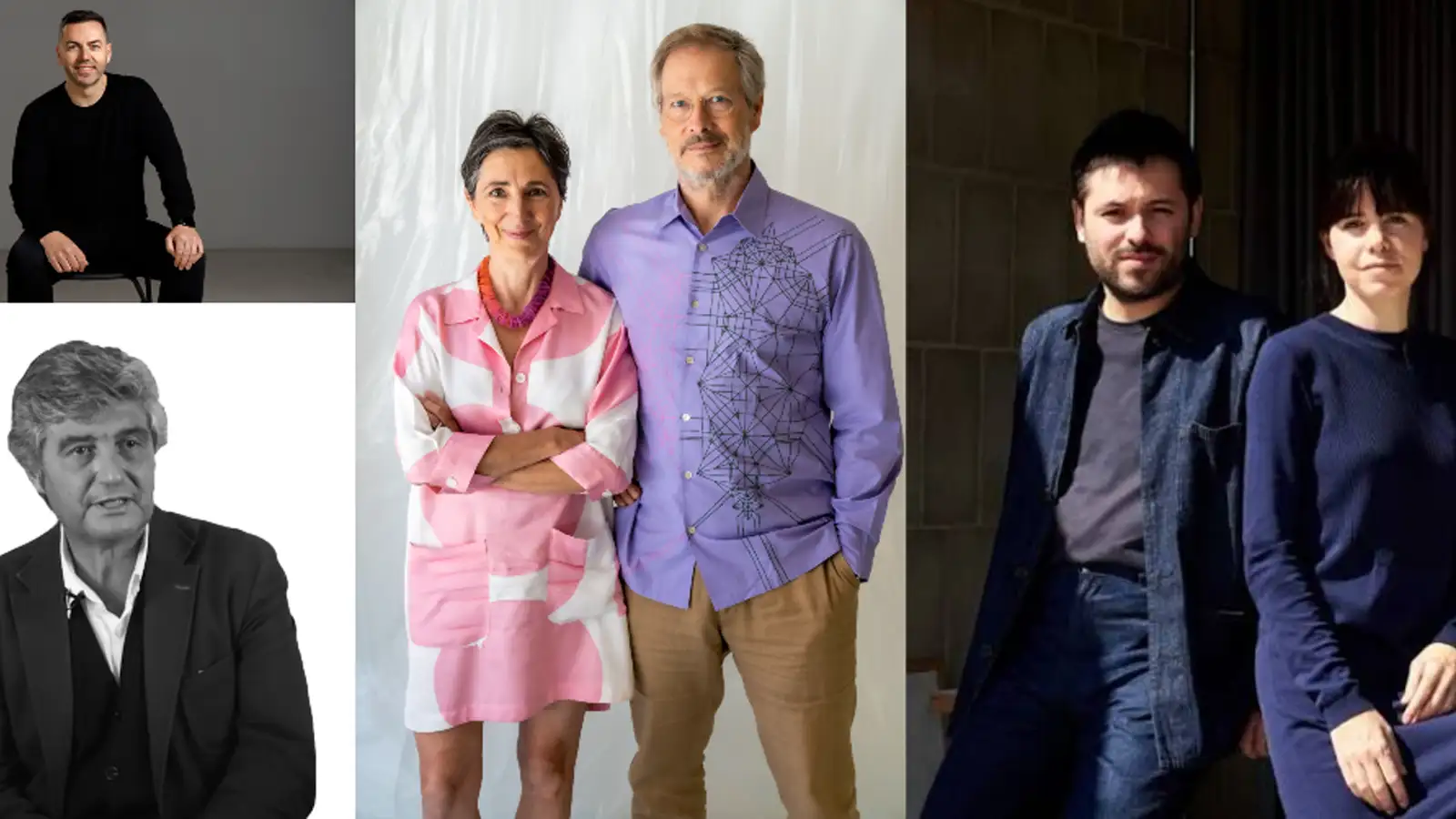
From 10 to 13 November, FIMMA + Maderalia will bring architects and industry professionals together at Feria Valencia to discuss housing, materials and new ways of building. Belén Moneo, Jeff Brock, Xavier Vilalta, Juan Trías de Bes and Pau Bajet are among the speakers on a programme that raises a compelling question: how can we industrialise construction without diminishing architecture?


A different way to begin a building
A home begins long before anyone opens its front door. We tend to think of the site, the drawings or the first foundations. Yet a growing part of the architectural conversation is taking place somewhere else: in workshops, factories and the processes used to prepare building components before they reach the site.
Industrialised construction is not a single method. It can involve panels, structural elements or three-dimensional modules manufactured in controlled conditions and subsequently assembled in their final location. Its significance goes beyond shorter construction times: it calls for decisions that might once have been made on site to be coordinated much earlier in the design process.
That is one of the issues on the agenda at FIMMA + Maderalia’s new Industrialised Construction Hall, making its debut during the fair, scheduled for 10–13 November 2026 at Feria Valencia. The organisers have announced a space devoted to materials, technical solutions, demonstrations and professional discussion.
Architects, materials and the questions that matter
The Architecture and Construction Forum will host some of the programme’s key sessions on 11 and 12 November. The announced speakers include Belén Moneo and Jeff Brock, founders of Moneo Brock; Xavier Vilalta of Vilalta Studio; Juan Trías de Bes of TdB Arquitectura; and Pau Bajet of Bajet Giramé.
Their work spans different scales and approaches. That breadth could make for a richer discussion than one concerned solely with output and speed. How far can a process be standardised while remaining responsive to its setting? How can attention to detail be protected? Which decisions should remain unique to each project?
These questions are particularly relevant when we look at architecture through its materials. An industrialised system may define a building’s structure or envelope with great precision, but the character of a space also comes from light, proportion, surface texture and the way materials meet.


From affordable housing to tourism and coliving
On Wednesday 11 November, from 11:00 to 12:00, the forum will examine industrialised projects in residential development, affordable housing, rental accommodation and hotels. According to the programme, Moneo and Brock will be joined by Santiago Sanjuán (Qilak), Fernando Oiza (Woodville), Nacho Marín (Superestudio) and Fernando Olba (Olba A+U).
The following roundtable, scheduled for 12:15–13:00, will consider the barriers to wider adoption, including regulation, manufacturing capacity and collaboration across the construction industry.
On Thursday 12 November, attention will turn to tourism developments, cooperative housing and coliving, with a particular focus on two- and three-dimensional building systems. Speakers will include Marina Sanahuja (Voltes), Pau Bajet, Carlos Pueyo (Adoras), Juan Trías de Bes and Xavier Vilalta, among others.
A later roundtable poses a revealing question: “Can everything be industrialised?” The wording reflects a session title in the official programme and serves as a reminder that no construction method is equally suited to every brief.
Does building faster mean building better?
Offsite construction has the potential to reduce building times and waste, but outcomes depend on the project and the organisation of the entire supply chain. The European Commission identifies a potential reduction of 20–60% in construction time and 10–15% in waste for these processes. These are estimates of potential benefits, not promises that apply to every building.
The same European analysis identifies specific obstacles: fragmented regulations, high initial investment, shortages of skilled workers and insufficiently stable demand.
Any discussion of sustainability therefore needs to consider the full picture: where materials come from and how long they last, energy use, transport, repair, maintenance and the building’s performance over its lifetime. Neither timber nor industrialised construction is, in itself, an environmental certification.


Public housing enters the conversation
The debate will begin a day before the forum’s main roundtables. On Tuesday 10 November at 10:00, the Instituto Valenciano de la Edificación (IVE) will organise a session entitled “Industrialised construction: the path towards sustainable, high-quality architecture” (original Spanish title: Construcción industrializada. El camino hacia una arquitectura sostenible y de calidad).
The session will focus on publicly protected housing, regulation and practical technical experience. The announced examples include housing projects in Albal, Utiel and Torrent, along with applications of industrialised construction to healthcare facilities and a presentation on circularity and certification.
It is an essential perspective. If new building methods are to help meet housing needs, understanding their technical possibilities matters just as much as understanding the real conditions in which public authorities and professionals can put them to work.
Advance registration is required for this session through the form linked by the organisers.
Technology still needs an architectural eye
The new hall will also feature live demonstrations of industrialised solutions, with plans that include erecting a three-storey structure. The display is intended to bring visitors closer to a stage of construction rarely seen in the finished photographs of architectural projects.
What lessons the event will offer remains to be seen. Yet the conversation deserves attention because it concerns how buildings are designed and inhabited. Somewhere between the possibilities of the factory and the demands of the site lies a space where engineering, craftsmanship, design and everyday life meet.
Perhaps industrialisation is not about making identical buildings, but about organising what can be repeated more intelligently so that more care can be given to what makes each place distinctive. Architectural quality will still be measured, in part, by the details that endure long after construction is complete.
Sources and image credits
This is an independently written editorial article based on publicly available documentation. It is not sponsored content or a reproduction of the press release.
- FIMMA + Maderalia / Feria Valencia: announcement of the programme and speakers (30 October 2026; source in Spanish).
- FIMMA + Maderalia: official 2026 conference and activity programme (in Spanish).
- FIMMA + Maderalia: presentation of the Industrialised Construction Hall and planned demonstrations (in Spanish).
- European Commission: analysis of offsite construction, its potential and barriers to adoption (in English).
About the photographs: documentary images published on Wikimedia Commons under the CC0 1.0 public-domain dedication. Links to the individual files and photographer credits appear in each caption. None of the photographs depicts FIMMA + Maderalia 2026.
THE CONVERSATION
The conversation continues.
A story continues with what you have to say. Comment on the article as a whole here; remarks on photographs belong in “A Second Look”.
No general comments yet. Start the conversation.